
Electric Scooter Gloves for Winter: How to Keep Your Hands Warm
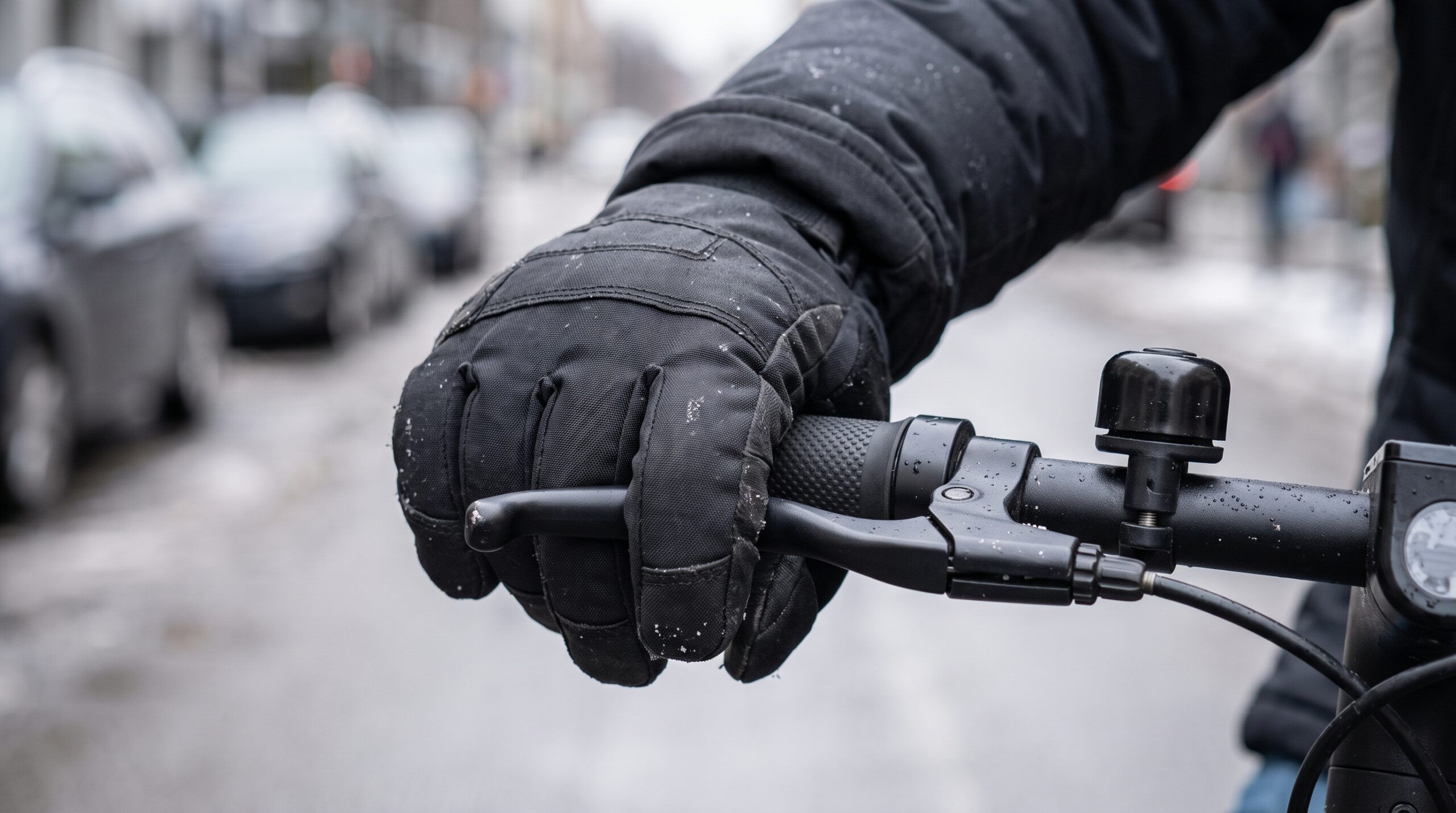
If you’ve ridden an electric scooter in January, you know the moment. Your fingers go stiff, the brake lever suddenly feels far away, and you start squeezing harder than you need to. Electric scooter gloves for winter can fix most of that, but only if you pick the right type. The wrong pair can leave you just as cold, or worse, make braking harder. In this guide I’ll explain why your hands freeze first, compare your real options, and point out the features that matter once you’re actually moving. You’ll leave knowing what I’d buy and what I’d skip.
Quick Answer
- Best all-round choice: Insulated gloves with a wind-resistant or water-resistant shell and grippy palms.
- Best for long, cold commutes: Bar mitts or heated grips, since they keep the whole hand in a warmer space.
- Most important feature: Brake and throttle feel. Warmth doesn’t help if you can’t control the scooter.
- Main mistake to avoid: Cotton. Wet cotton draws heat away from your skin fast.
- Check before you buy: Whether your scooter’s handlebars and electrical system can take heated accessories.
Table of Contents
Why Your Hands Freeze First on an Electric Scooter
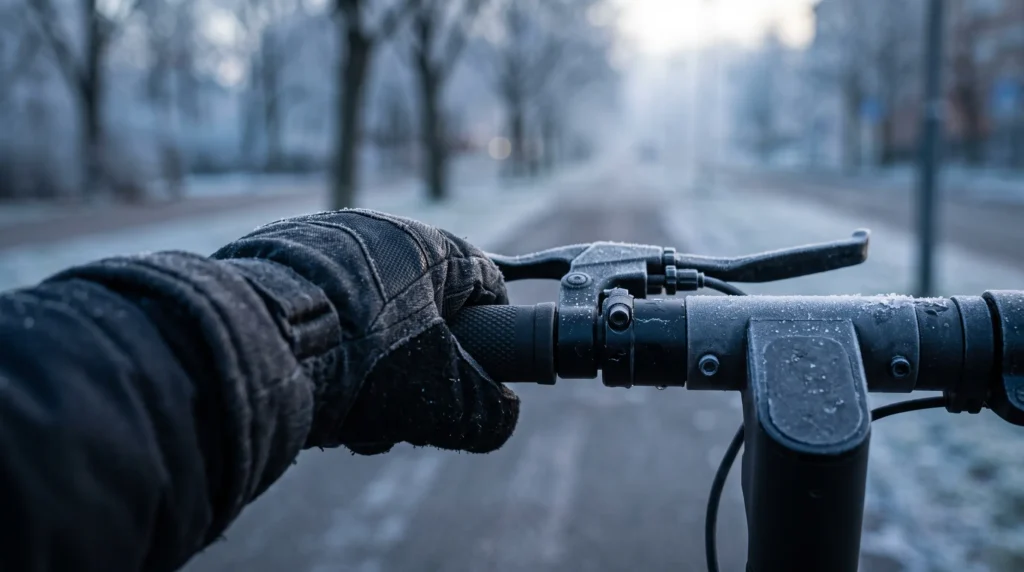
Your hands sit on the bars in open air for the entire ride. Unlike a bike, you can’t tuck them into your pockets or fold your arms, and you’re holding a grip that pulls heat away through the palms. Wind makes it worse, and speed makes wind worse.
And there’s a second problem. Most riders grip the bars tighter when they’re cold, which restricts blood flow to the fingers and makes them colder still. Breaking that loop matters as much as buying the warmest glove you can find.
Gloves, Bar Mitts, or Heated Grips?
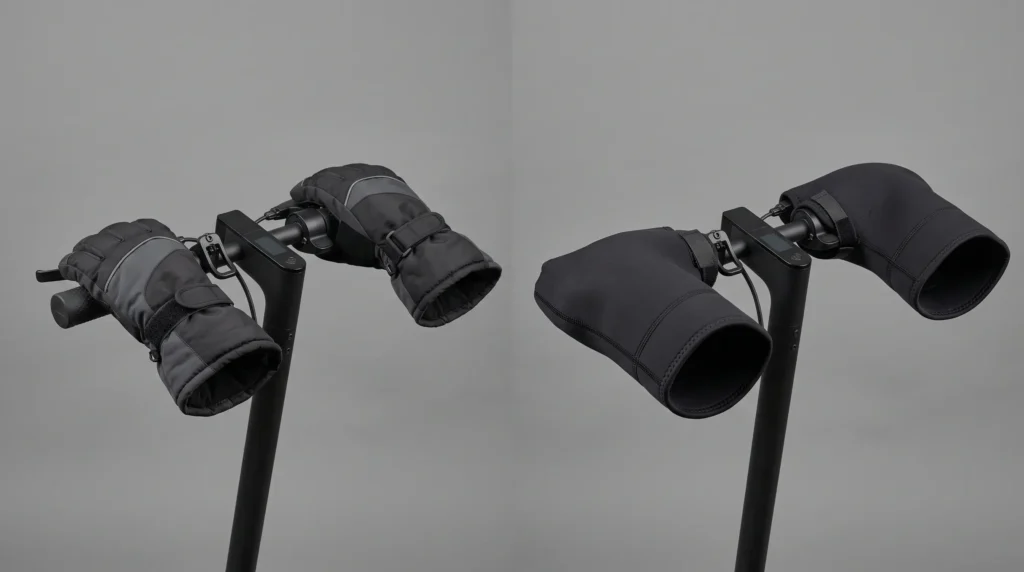
There isn’t one best option. It depends on how far you ride, how cold it gets, and how much you’re willing to spend or install. Here’s how I’d compare them.
| Option | Warmth | Brake and throttle feel | Best for | Main downside |
|---|---|---|---|---|
| Insulated gloves | Moderate | Good | Short to medium rides, mild to cold weather | Can soak through in heavy rain |
| Waterproof winter gloves | High | Fair to good, depends on bulk | Wet, cold climates | Extra bulk can dull feel |
| Bar mitts (muffs) | High | Fair, depends on fit | Riders who want big warmth for less | Fit varies, and some block brake reach |
| Heated grips | Very high | Good | Long commutes, very cold areas | Installation effort, battery draw [verify] |
| Heated gloves | High | Good | Riders who want gloves with extra heat | Battery charging and management |
For most people reading this, I’d start with a good insulated glove. Add bar mitts if your rides regularly go past 20 minutes in the cold. Heated grips are the most effective option I know of, but they’re a bigger commitment, so I’d only go that route if you’re truly riding through hard winters.
What to Look for in Winter Scooter Gloves
Brake and throttle feel
This is the feature people underrate. Thick palms and padded fingers can make the brake lever feel distant or mushy. Try any pair with the scooter stopped. Squeeze the brake a few times, then roll the throttle gently. If you can’t feel the lever clearly, the gloves are too bulky for riding, no matter how warm they are.
Waterproof vs. water-resistant
Here’s the honest version: fully waterproof gloves are great until your hands start sweating inside them. Water-resistant shells with a windproof layer handle most dry winter days well, and they breathe better. If your city gets a lot of wet weather, go waterproof. Otherwise, a water-resistant pair is usually more comfortable.
Wrist coverage and fit
Look for a cuff long enough to overlap your jacket sleeve. A gap at the wrist lets in cold air fast. Fit matters too. Gloves that are too tight restrict circulation, and gloves that are too loose let air move around your hand. You want a snug fit with a little room to wiggle your fingers.
Materials
Merino wool liners and synthetic insulation both do a good job. Avoid cotton entirely for riding. Leather or synthetic palms with some texture give you better grip, which helps when your hands are cold and a bit slippery.
My Picks by Budget
I’m not going to name specific products here, because prices and models change quickly and I’d rather not give you details I can’t verify. Instead, here’s how I’d shop.
If your budget is tight, look for a basic insulated glove with a water-resistant shell and a snug cuff. Check reviews from riders who mention brake feel, not just warmth. This is the right choice for most short commutes.
If you ride through real winter, I’d spend more on a pair with proper waterproofing and a good wrist seal. Pair them with a thin liner underneath, which adds warmth without much bulk.
If you ride long distances in serious cold, bar mitts or heated grips may be worth the money. They’re not glamorous, but they make a bigger difference than most gloves can. Just confirm compatibility first.
Mistakes That Leave Your Hands Cold
The first is wearing cotton gloves, which hold moisture and lose heat quickly. The second is buying gloves that are too thick for your brake reach, then riding with your fingers partly off the lever. That’s uncomfortable and unsafe.
The third mistake is ignoring your core. When your body is cold, your fingers get cold faster. A warm base layer and a windproof jacket do more for your hands than people expect. And finally, don’t wait until your fingers hurt to stop. Numbness is a sign you’re already losing control. Pull over, shake your hands, and warm them up before you continue.
Habits That Help Your Hands Stay Warm
Before a cold ride, I’d take a minute to warm your hands indoors. Gently open and close them, or hold something warm for a few moments. Starting cold makes it harder to recover once you’re moving.
During the ride, keep your wrists covered and avoid clamping the bars. Loosen your grip on the straight sections and only tighten it when you need to. This simple habit reduces fatigue and keeps blood flowing.
Hand warmers can help on very cold days. Keep them away from direct skin contact and follow the package instructions, since some can get hot enough to cause burns [verify]. I’d use them as a backup, not a plan.
Common Questions About Electric Scooter Gloves for Winter
Are electric scooter gloves for winter worth it for short rides?
Usually, yes. Even a ten-minute ride can leave your fingers aching and clumsy, and clumsy fingers are how brake mistakes happen. If the air is mild and the ride is very short, a thin liner glove may be enough. Below freezing, I’d wear proper insulated gloves regardless of distance.
Can I ride an electric scooter in the rain while wearing winter gloves?
You can, but only if the gloves handle water. Most insulated gloves lose a lot of warmth once they soak through, and wet cold is worse than dry cold. Look for a waterproof membrane or a water-resistant shell, with cuffs that overlap your sleeves. In heavy rain, bar mitts are a solid backup because they keep your hands out of the weather.
Do heated grips work on every electric scooter?
No, and this is where many riders get caught out. Compatibility depends on your scooter’s handlebar diameter, its electrical system, and whether the manufacturer allows modifications. Some kits are built for specific models, while others need more wiring work than most people want. Check compatibility and warranty effects before you buy [verify].
Will bulky winter gloves make it hard to use the brake?
They can, which is why I’d never choose winter gloves based on warmth alone. Thick palms can make a lever feel distant, and you may end up squeezing harder than necessary. Test the gloves while the scooter is stopped, squeeze the brake several times, and make sure you can still control the throttle smoothly. If you can’t, try a thinner insulated pair.
Do heated gloves or bar mitts drain the scooter battery faster?
Bar mitts are passive, so they don’t draw power. That’s one of their biggest advantages. Heated grips and heated gloves do use battery power, and the amount depends on the heat setting and the system. Check your scooter’s manual and any kit documentation for specifics [verify]. Cold weather reduces battery range in general, so expect a shorter ride whatever you add.
Why do my fingers still go numb even with gloves on?
Usually because the gloves don’t fit well or your core is cold. Tight gloves restrict circulation, and loose ones let cold air in. Your body also protects its core first, so your fingers cool faster when you’re chilly overall. Try a snug fit, a warm base layer, and a minute of hand movement before you ride.
So, Which Electric Scooter Gloves for Winter Should You Pick?
If your rides are short and the weather is mild, a good insulated glove with grippy palms and a snug cuff will serve you well. If you ride through real winter or get caught in wet weather, go with waterproof gloves, and add bar mitts or heated grips if your commute runs long. Whatever you choose, test the brake before you ride.
My next step would be simple. Measure how far your fingers reach the brake lever, check your scooter’s manual for accessory compatibility, and then shop for electric scooter gloves for winter that leave you enough control to ride safely.

One Comment
Comments are closed.