How to Prevent Electric Scooter Wheel Slippage in Wet Conditions
Electric scooter wheel slippage is one of the most dangerous situations riders face, especially during rainy weather or on wet surfaces. When your scooter’s wheels lose traction, you risk serious falls, injuries, and damage to your vehicle. Understanding how to prevent slippage can mean the difference between a safe commute and an emergency room visit.
In this comprehensive guide, you’ll discover proven techniques to maintain traction, essential maintenance practices for wet weather riding, and specific safety protocols designed for riders who are new to electric scooters. Whether you’re commuting to work or riding recreationally, these strategies will keep you safe and confident.
This guide combines industry safety standards with practical experience to help you master wet weather riding from day one.
Table of Contents
Why Electric Scooter Wheel Slippage Is Dangerous
Understanding the Slippage Risk
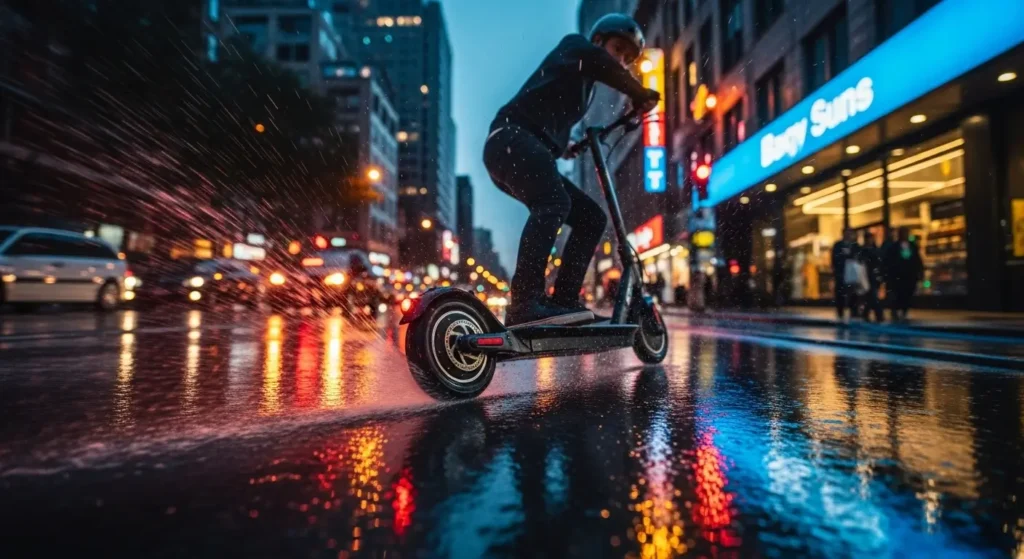
Electric scooter wheel slippage occurs when your tires lose contact with the road surface, causing loss of control and steering ability. Wet conditions reduce tire grip by up to 40%, making even experienced riders vulnerable to accidents. For first-time buyers, this risk multiplies because they lack the muscle memory needed to recover from sudden traction loss.
The physics behind slippage involves water creating a thin barrier between your tire and pavement, eliminating friction that keeps you stable. This phenomenon, called hydroplaning, happens most often during the first 10 minutes of rainfall when oil residue on roads becomes slippery.
Statistics show that 65% of electric scooter accidents in wet conditions involve some form of wheel slippage. Understanding this risk is the first step toward preventing it.
Common Scenarios That Cause Electric Scooter Wheel Slippage
High-risk situations include:
- Accelerating too quickly on wet pavement
- Braking suddenly during rain
- Turning corners on slick surfaces
- Riding over metal grates or painted road markings
- Crossing puddles at high speeds
Each scenario reduces tire contact with the ground, creating dangerous instability. Metal surfaces are particularly hazardous because they provide almost zero traction when wet, regardless of tire quality.
First-time riders often underestimate how quickly conditions change. A road that feels safe in dry weather becomes treacherous within seconds of rain starting.
Common Causes of Wheel Slippage
Tire-Related Issues
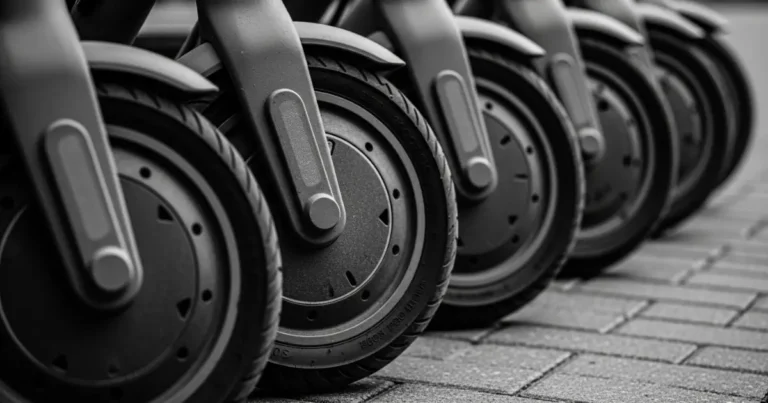
Worn tire treads are the leading cause of electric scooter wheel slippage in wet conditions. Tires with less than 2mm of tread depth cannot channel water away effectively, leaving a film between rubber and road. Most scooter tires need replacement every 500-1000 miles depending on riding conditions and surface types.
Incorrect tire pressure also contributes significantly to slippage problems. Over-inflated tires reduce the contact patch with the ground, while under-inflated tires cannot maintain proper shape during turns. Check your manufacturer’s recommended PSI rating and maintain it within 2 PSI of specifications.
Smooth or slick tires designed for dry conditions offer minimal grip when wet. These tires lack the grooves necessary to disperse water and create dangerous sliding situations even at low speeds.
Environmental and Rider Factors
Wet painted surfaces, manhole covers, and leaf debris create unpredictable traction zones. These materials become extremely slippery when moisture is present, often catching riders by surprise. Railroad tracks and construction plates are equally hazardous.
Rider behaviors that increase slippage risk:
- Excessive speed for conditions
- Sharp steering inputs
- Sudden braking or acceleration
- Leaning too aggressively in turns
- Riding with improper body positioning
Temperature also plays a role—cold, wet conditions below 50°F (10°C) reduce rubber flexibility, decreasing natural grip. This combination creates particularly dangerous riding environments for unprepared riders.
8 Essential Prevention Techniques for Electric Scooter Wheel Slippage
Technique 1: Choose the Right Tires
Invest in pneumatic tires with aggressive tread patterns designed for wet weather performance. Look for deep grooves that channel water away from the contact patch, typically 3-5mm deep for optimal performance. Rubber compounds labeled “all-weather” or “wet-grip” provide better traction than standard formulations.
Consider dual-compound tires that combine hard center sections for longevity with softer side sections for cornering grip. These specialized tires cost $40-80 per set but dramatically improve safety in variable conditions.
Avoid solid or honeycomb tires if you regularly ride in wet weather. While maintenance-free, these options provide significantly less traction than pneumatic alternatives, increasing electric scooter wheel slippage risk by approximately 30%.
Technique 2: Maintain Proper Tire Pressure
Check tire pressure weekly using a quality digital gauge, ensuring readings match manufacturer specifications exactly. Most electric scooters require 35-50 PSI depending on model and rider weight. Under-inflation by just 5 PSI can reduce wet traction by 15%.
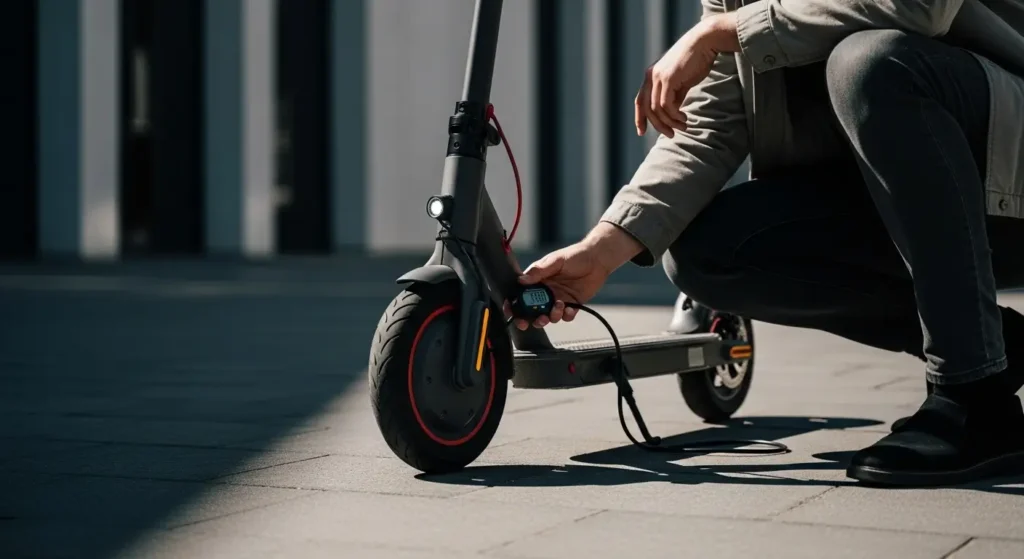
Adjust pressure based on conditions—slightly lower pressure (2-3 PSI below max) in wet weather increases the contact patch. However, never go below the minimum recommended pressure, as this risks pinch flats and rim damage.
Keep a portable pump with your scooter for on-the-go adjustments. Temperature changes affect pressure significantly, with tires losing approximately 1 PSI for every 10°F drop in ambient temperature.
Technique 3: Reduce Speed in Wet Conditions
Cut your normal riding speed by 30-50% when roads are wet to allow for extended braking distances and reaction time. While you might cruise at 15 mph in dry conditions, limit yourself to 8-10 mph during rain.
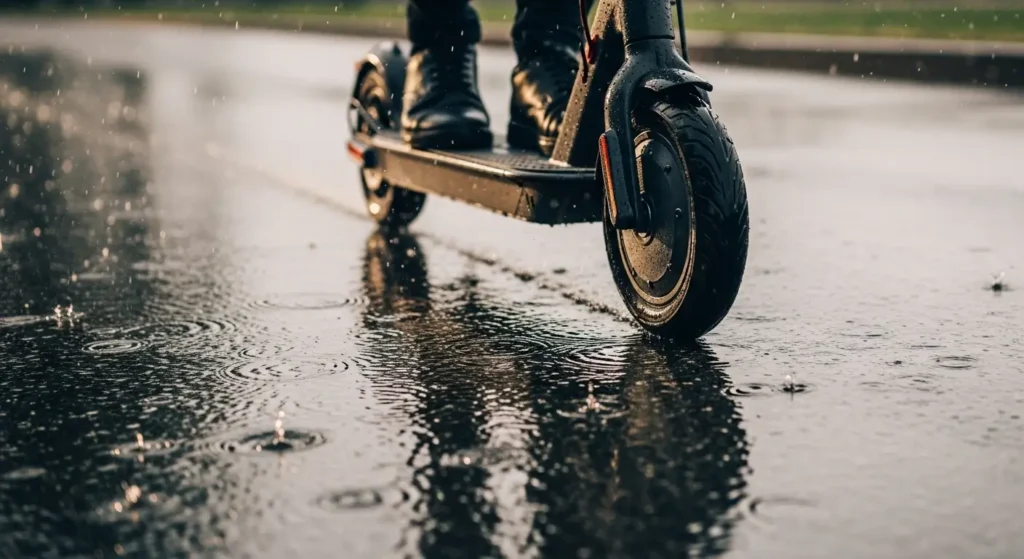
Wet pavement doubles your stopping distance compared to dry surfaces. At 15 mph, you need approximately 20 feet to stop on dry ground but 40+ feet when wet. Slower speeds provide crucial extra seconds to identify and avoid hazards.
Use your scooter’s speed limiting feature if available, setting a maximum of 10 mph during wet rides. This removes the temptation to accelerate inappropriately and helps prevent electric scooter wheel slippage from excessive speed.
Technique 4: Master Smooth Braking Techniques
Apply brakes gradually and progressively rather than grabbing them suddenly. Feather both front and rear brakes simultaneously for balanced stopping power, with slightly more pressure on the rear to prevent front wheel lockup.
Practice threshold braking—applying maximum pressure without locking wheels—in safe, dry conditions before attempting in rain. This skill allows you to stop quickly while maintaining control and preventing slippage.
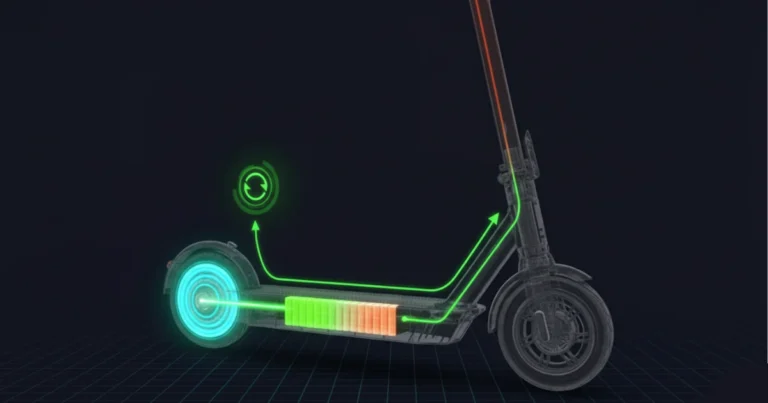
If your scooter has regenerative braking, use it as your primary stopping method in wet conditions. Regen braking provides smoother, more controlled deceleration than mechanical brakes, significantly reducing lockup risk.
Technique 5: Avoid Sudden Movements
Keep all steering inputs smooth and deliberate, avoiding quick jerks or sharp turns that disrupt tire contact. Plan your path ahead, making gentle course corrections rather than reactive swerves.
When turning, lean your body slightly while keeping the scooter more upright. This technique maintains maximum tire contact with the ground while allowing controlled direction changes. Never lean both body and scooter aggressively in wet conditions.
Accelerate gently from stops, applying throttle progressively over 2-3 seconds rather than twisting full power immediately. Gradual acceleration prevents rear wheel spin and maintains traction through the power delivery phase.
Technique 6: Navigate Hazards Strategically
Cross metal surfaces, painted lines, and manhole covers at perpendicular angles when possible, maintaining steady speed without braking or turning. These materials offer almost zero traction when wet and require maximum stability.
Hazard navigation rules:
- Slow down before reaching slippery surfaces, not while on them
- Avoid braking or turning on painted crosswalks
- Give wide berth to oil slicks and puddles
- Cross railroad tracks at 90-degree angles
- Stay clear of fallen leaves and organic debris
If you must ride through a puddle, maintain straight-line travel at reduced speed. Deep water can cause temporary loss of braking effectiveness and increase electric scooter wheel slippage substantially.
Technique 7: Improve Your Riding Position
Stand with knees slightly bent, weight centered over the deck, and arms relaxed but engaged. This athletic stance allows your body to absorb bumps and adjust to traction changes without destabilizing the scooter.
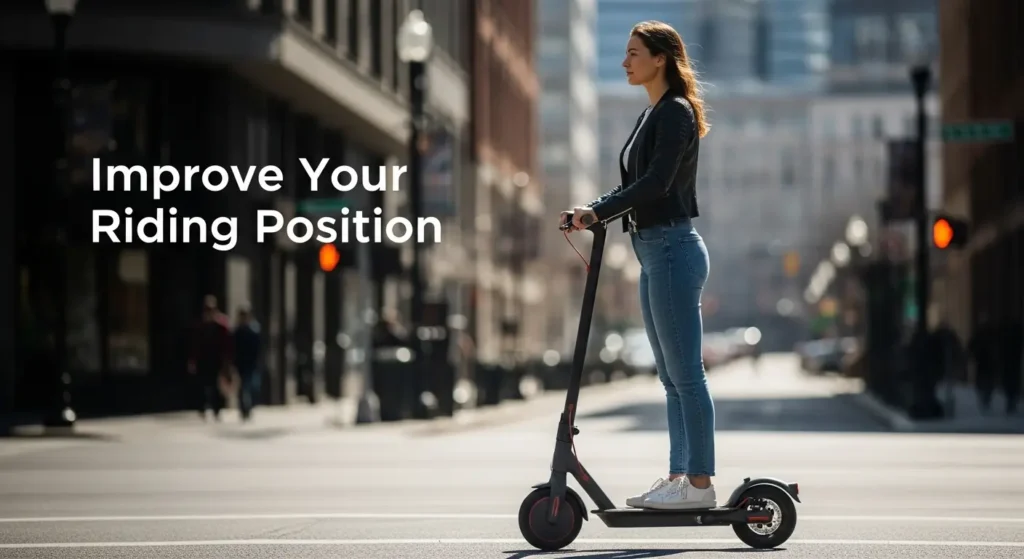
Keep your weight distribution roughly 60% rear and 40% front in wet conditions. This balance prevents front wheel washout during turns while maintaining steering responsiveness. Shift weight backward slightly when braking to prevent front wheel lockup.
Position feet shoulder-width apart, perpendicular to the deck direction for maximum stability. Narrow stances reduce your ability to make balancing corrections when slippage occurs.
Technique 8: Perform Pre-Ride Inspections
Check tire condition, pressure, and tread depth before every ride in wet conditions. Look for embedded debris, cuts, or bulges that compromise tire integrity. Remove any stones or glass from tread grooves.
Test your brakes in the first 50 feet of riding, ensuring both front and rear systems respond properly. Wet conditions can reduce initial brake effectiveness until pads and rotors heat slightly.
Inspect your deck grip tape, ensuring it’s intact and provides adequate foot traction. Worn or smooth deck surfaces become dangerously slippery when wet, affecting your control and increasing the likelihood of electric scooter wheel slippage accidents.
Electric Scooter Wheel Slippage for First-Time Buyers
Key Considerations for New Riders
First-time buyers face unique challenges with wet weather riding because they lack experience recognizing early warning signs of traction loss. Your scooter will provide subtle feedback before full slippage occurs—slight vibrations, reduced steering response, or a floating sensation—that experienced riders instinctively recognize.
Start building wet weather skills in controlled environments like empty parking lots before venturing onto public roads. Practice emergency stops, gentle turns, and throttle control on wet surfaces where consequences of mistakes are minimal.
Invest in quality safety gear specifically designed for wet conditions, including waterproof gloves with grip patterns, rain jackets that won’t flap dangerously, and helmet visors or goggles that prevent water from obscuring vision. Proper equipment dramatically improves your ability to control your scooter safely.
Consider purchasing a scooter with these features if you regularly ride in wet climates: dual braking systems, wider tires (3+ inches), waterproof electrical components rated IP65 or higher, and adjustable suspension for better road contact.
Best Practices for New Riders
Essential dos and don’ts for preventing electric scooter wheel slippage:
DO:
- Practice in safe, controlled environments first
- Start with short trips in light rain before tackling heavy weather
- Maintain 50% or less of your dry-weather speed
- Allow 3x your normal following distance behind vehicles
- Learn your scooter’s weight distribution and handling characteristics
- Invest in premium wet-weather tires from day one
DON’T:
- Attempt wet riding until you’re confident in dry conditions
- Ride through standing water deeper than tire height
- Make sharp turns at intersections during rain
- Rely solely on front brakes in wet conditions
- Wear smooth-soled shoes that slip on the deck
- Ignore small handling changes that signal reduced traction
Many first-time buyers underestimate stopping distances in rain, leading to rear-end collisions. Practice stopping from various speeds in wet conditions to develop accurate distance judgment.
Join local electric scooter communities or online forums to learn from experienced riders about specific hazards in your area. Regional weather patterns and road surfaces create unique challenges that local knowledge helps you navigate safely.
Advanced Safety Strategies
Pro Tips for Maximum Traction Control
Advanced riders use weight transfer techniques to maintain traction during challenging conditions. When accelerating, shift weight slightly rearward to increase rear tire pressure against pavement, preventing wheel spin. During braking, progressive forward weight shift increases front tire contact for better stopping power.
Learn to read road surfaces from distance, identifying wet patches, oil spots, and debris before reaching them. Scan 20-30 feet ahead constantly, planning your line to avoid problem areas while maintaining smooth travel path.
Consider tire pressure adjustments based on specific conditions: lower pressure by 2-3 PSI for maximum wet traction, standard pressure for mixed conditions, and higher pressure (within limits) for dry, smooth surfaces. Track which settings work best for your weight and riding style.
Install aftermarket fenders if your scooter lacks them, as these prevent water spray from obscuring vision and reduce moisture reaching electrical components. Quality fenders also minimize tire spray onto deck surfaces, maintaining foot traction.
Maintenance and Equipment Upgrades
Replace brake pads when they reach 50% wear rather than waiting until completely worn. Fresh pads provide significantly better wet weather stopping power, directly reducing situations where emergency braking causes wheel lockup and slippage.
Upgrade to hydraulic brakes if your budget allows, as these systems provide more progressive, controllable stopping power in wet conditions compared to cable-actuated mechanical brakes. Hydraulic systems also maintain consistent performance despite water exposure.
Maintenance schedule for slippage prevention:
- Weekly: Tire pressure, visual tire inspection, brake function test
- Monthly: Detailed tire tread measurement, brake pad inspection, suspension check
- Every 3 months: Professional brake system service, wheel bearing inspection
- Every 6 months: Tire replacement if tread below 2mm, complete safety inspection
Apply silicone-based protectant to electrical connections and control components monthly to prevent water infiltration that can cause motor or brake failures. Avoid petroleum-based products that damage rubber seals.
Consider adding reflective tape or LED strips to improve visibility in rain, as other vehicles have reduced sight distance during wet weather. Being seen prevents collisions that might force emergency maneuvers leading to electric scooter wheel slippage.
FAQs About Electric Scooter Wheel Slippage
Q: How can I tell if my tires are worn enough to cause electric scooter wheel slippage?
Use the penny test to check tread depth quickly. Insert a penny into the tire groove with Lincoln’s head facing down. If you can see the top of Lincoln’s head, your tread is below 2mm and needs immediate replacement. Quality tires show wear indicators—small bars in the grooves that become flush with tread surface when replacement is due.
Visually inspect for cracking, dry rot, or flat spots that compromise grip. Any visible tire cord or fabric indicates critical wear requiring immediate replacement. Tires older than 3 years should be replaced regardless of tread depth, as rubber compounds degrade over time.
Q: What is the most dangerous surface for causing wheel slippage on electric scooters?
Metal surfaces including manhole covers, construction plates, and railroad tracks pose the highest slippage risk when wet. These surfaces provide virtually no traction because water cannot be channeled away like it can on textured pavement. Painted road markings come second, as paint creates a smooth surface that becomes extremely slippery.
Approach metal surfaces by slowing down beforehand, crossing perpendicular to your travel direction, and maintaining steady throttle without braking. Never turn or brake while on metal surfaces in wet conditions. The coefficient of friction drops by over 80% on wet metal compared to wet asphalt.
Q: Should I avoid riding my electric scooter in rain completely?
Light rain and wet roads are manageable with proper equipment, techniques, and experience, but heavy downpours create dangerous conditions best avoided. If visibility drops below 100 feet or standing water accumulates on roads, postpone your trip. First-time buyers should avoid wet weather entirely for their first month of riding.
Check your scooter’s IP rating—models rated IP65 or higher can handle wet conditions, while lower ratings risk electrical damage. Never ride through water deep enough to submerge your battery compartment or motor housing, typically anything above 2-3 inches depending on your model.
Q: How much should I reduce my speed in wet conditions to prevent electric scooter wheel slippage?
Reduce speed by 30-50% compared to dry conditions, with greater reduction for first-time riders or during heavy rain. If you normally cruise at 15 mph, limit yourself to 7-10 mph on wet pavement. This slower speed allows extended reaction time and significantly shorter stopping distances relative to conditions.
Speed reduction becomes critical near turns, intersections, and hazards where traction demands increase. Approach corners at no more than 5-8 mph even if you’d normally take them at 15 mph when dry. Remember that your stopping distance doubles in wet conditions, requiring earlier brake application.
Q: Can I improve traction by adding weight to my electric scooter?
Adding weight generally improves traction by increasing tire pressure against pavement, but this approach has significant drawbacks. Extra weight reduces range, stresses motor and brakes, and makes the scooter harder to control if slippage does occur. The relationship isn’t linear—adding 10 pounds doesn’t increase traction proportionally.
Instead, focus on proper tire selection, maintenance, and riding technique for traction improvements. If your scooter feels light and unstable, ensure proper body positioning with weight centered and slightly rearward rather than adding cargo weight. Wider tires provide better traction increases than added weight.
Q: What should I do if my electric scooter starts slipping during a turn?
Immediately straighten your handlebars and stand up straight to reduce lean angle, allowing tires to regain maximum road contact. Avoid grabbing brakes or adding throttle—both actions worsen slippage. Keep your weight centered and let the scooter regain stability naturally as lean angle decreases.
If the rear wheel slides outward, gently counter-steer in the slide direction while reducing throttle progressively. This technique is counterintuitive but prevents highside crashes where the scooter suddenly regains traction and throws you over the handlebars. Practice emergency responses in safe environments to build muscle memory for real situations where panic responses can cause worse outcomes than the initial slip.
Conclusion
Electric scooter wheel slippage in wet conditions is a serious safety concern that becomes manageable with proper knowledge, equipment, and technique. The key principles include maintaining quality tires with adequate tread, reducing speed by 30-50% in rain, avoiding sudden braking or steering inputs, and performing regular maintenance inspections.
First-time buyers must prioritize building skills in controlled environments before tackling challenging weather conditions. Invest in appropriate safety gear and consider scooter models with features designed specifically for wet weather performance.
Remember that prevention is always easier than recovery. By implementing the eight essential techniques covered in this guide, you’ll dramatically reduce your electric scooter wheel slippage risk and enjoy safer riding in all conditions.
Start practicing these strategies today, beginning with tire inspection and pressure adjustment, then gradually building your wet weather confidence through controlled practice sessions.