Best Ways to Secure an Electric Scooter at School
Learning how to secure an electric scooter at school prevents theft and protects your investment from the moment you arrive on campus. Electric scooters worth $300-$1,500 become prime targets in busy school environments where hundreds of students pass through daily.
Without proper security measures, you risk losing your scooter to opportunistic thieves who strike during class changes or after-school activities. This comprehensive guide reveals proven methods to protect your ride, from selecting high-security locks to implementing multi-layer defense strategies.
You’ll discover practical techniques specifically designed for first-time buyers navigating school parking areas, bike racks, and campus security policies. These actionable steps ensure your scooter remains exactly where you left it.
Table of Contents
Why Securing an Electric Scooter at School Is Critical
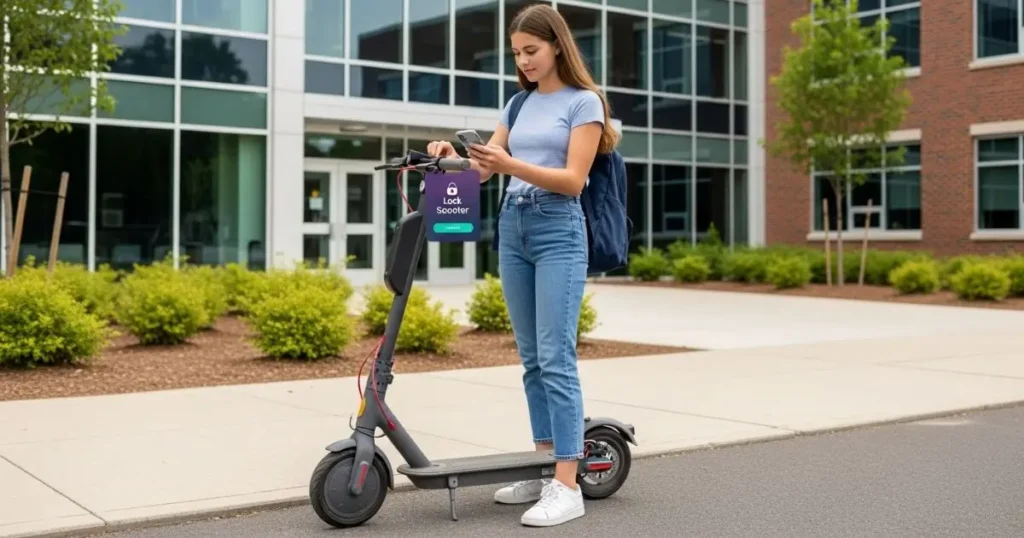
Why Secure Your Electric Scooter at School Matters
Electric scooter theft at educational institutions increased by 47% between 2023 and 2024, according to campus security reports nationwide. Schools create ideal conditions for theft: high foot traffic, minimal supervision during class hours, and predictable student schedules.
Most stolen scooters disappear during peak periods when thieves blend into crowds. A properly secured scooter takes 5+ minutes to steal, discouraging criminals who prefer quick 30-second grabs. Your scooter represents both financial investment and daily transportation—losing it disrupts your routine and costs hundreds to replace.
First-time buyers often underestimate campus theft risks, assuming school environments are inherently safe. Statistics prove otherwise: over 60% of scooter owners experience theft attempts or actual theft within their first year of campus use.
Common Security Mistakes at School
Many students make critical errors that turn their scooters into easy targets. Cable locks seem convenient but can be cut in under 10 seconds with basic bolt cutters commonly carried by thieves.
Securing only the stem while leaving wheels and battery accessible invites component theft. Thieves increasingly steal valuable parts like batteries ($200-$400) and motors ($150-$300) rather than entire scooters. Parking in isolated areas away from security cameras gives criminals privacy to work undetected.
Another mistake involves using identical parking spots daily, creating predictable patterns thieves exploit. Quick-release mechanisms left unlocked allow instant wheel removal. Relying solely on campus security without personal security measures leaves your scooter vulnerable during unstaffed hours and weekends.
How to Secure an Electric Scooter at School: 8 Essential Methods
Method 1: Choose the Right Lock Type
U-locks provide maximum security with hardened steel shackles resisting bolt cutters and angle grinders. Select U-locks rated Gold or Diamond level by Sold Secure standards, ensuring 13mm+ shackle thickness. Brands like Kryptonite New York and ABUS Granit offer protection levels suitable for high-theft school environments.
Chain locks work best when made from hardened steel links at least 10mm thick with protective fabric sleeves preventing frame damage. Choose chains 90cm-120cm long for flexibility securing multiple components to fixed objects.
Folding locks balance portability with security, featuring connected steel plates forming compact units. Look for models with 5mm+ plate thickness and anti-pick cylinder locks. Avoid combination locks—key-operated mechanisms provide superior tamper resistance.
Disc locks attach directly to brake discs, preventing wheel rotation and deterring casual theft. Combine disc locks with audible alarms producing 110+ decibel warnings when moved. Never rely on a single lock type—layering different lock styles increases security exponentially.
Method 2: Secure to Immovable Fixed Objects
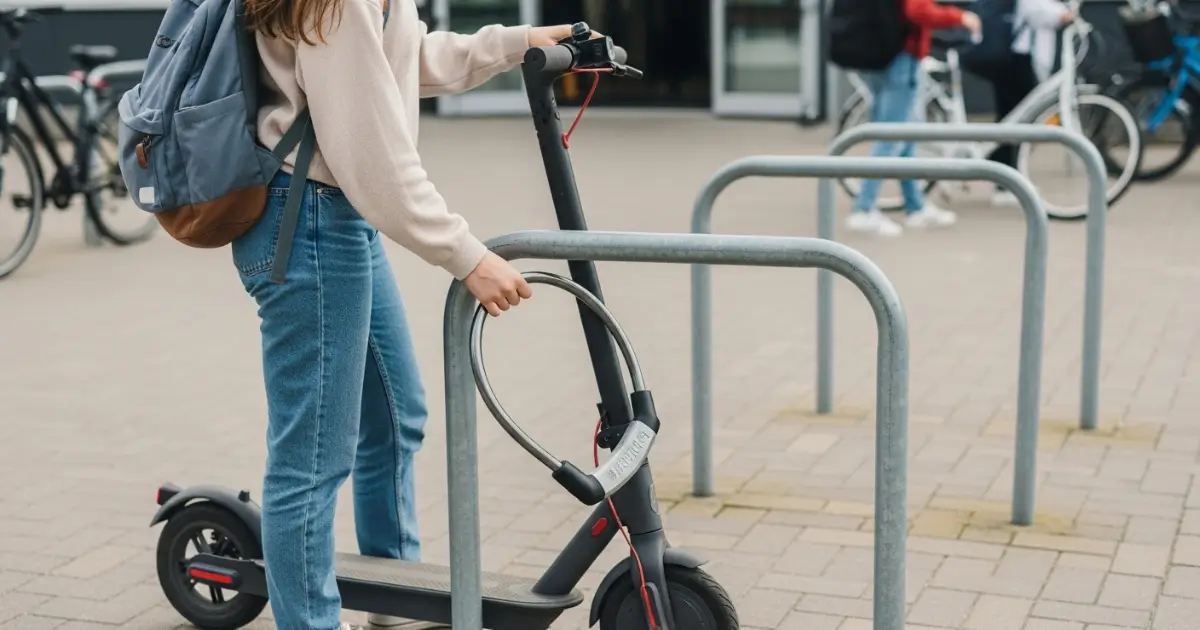
Identify robust anchoring points like bike racks, metal railings, or designated scooter parking structures permanently installed on school grounds. Test objects by attempting to shake them—proper anchors withstand significant force without movement.
Avoid wooden posts, chain-link fences, and decorative railings that can be cut, broken, or lifted. Position your scooter close to the anchor point, minimizing space for thieves to insert cutting tools. Thread locks through the frame and rear wheel, making theft require removing both components.
Lock your scooter above ground level when possible, preventing thieves from sliding locks off posts. Campus security offices often provide designated high-security parking areas with reinforced anchors specifically designed for electric mobility devices.
School administrators increasingly install dedicated scooter corrals with multiple locking points. Request access to these facilities, which often feature video surveillance and controlled entry systems providing additional protection layers.
Method 3: Lock Multiple Components Simultaneously
Secure the frame, rear wheel, and battery compartment with your primary lock in a single pass-through. This technique prevents component theft while securing the entire scooter to a fixed object.
Remove your battery and carry it if your model features removable power systems. Batteries represent the most valuable single component and fit easily in backpacks, eliminating the primary theft target.
Use a secondary lock specifically for the front wheel, threading it through the rim and fork. Quick-release wheels need additional security—replace quick-release skewers with locking versions requiring proprietary keys.
Consider locking your folding mechanism if your scooter has one. Thieves target folding scooters because collapsed models fit easily in vehicles. A small padlock through the folding joint prevents this vulnerability.
Method 4: Strategic Parking Location Selection
Park in high-visibility areas with constant foot traffic and security camera coverage. Thieves avoid locations where witnesses and surveillance systems document their activities.
Choose spots near building entrances, security offices, or faculty parking areas where staff presence deters criminal activity. Avoid corners, behind buildings, or areas blocked from view by landscaping or structures.
Vary your parking locations daily, preventing thieves from establishing patterns or preparing specific tools. Predictable routines allow criminals to plan theft attempts during known absence periods.
Request parking near school resource officers or security personnel if your campus has dedicated officers. Proximity to authority figures significantly reduces theft risks during school hours.
Method 5: Register Your Scooter’s Serial Number
Document your scooter’s serial number, usually located on the bottom of the deck or near the motor. Photograph the number and store images in cloud storage for recovery purposes.
Register your scooter with your school’s security office, providing make, model, color, and serial number. Many schools maintain databases helping recover stolen property and identify owners of found items.
Use permanent marking systems like UV pens or microdot technology to mark hidden components with unique identifiers. These invisible marks help police identify stolen scooters even after criminals remove obvious identification.
Consider GPS tracking devices specifically designed for electric scooters. These compact units hide inside frames and provide real-time location data if theft occurs, dramatically increasing recovery chances.
Method 6: Use Alarm Systems and Deterrents
Install motion-activated alarms producing loud warnings when your scooter moves unexpectedly. Modern alarm systems connect to smartphone apps, sending instant notifications if tampering occurs.
Disc brake alarms combine physical locks with 110+ decibel sirens activated by movement. The combination of noise and physical security creates powerful psychological deterrents for thieves.
Apply highly visible security stickers warning of tracking systems and alarms, even if you don’t have these features installed. Thieves often choose easier targets without visible security measures.
Cable alarm locks emit ear-piercing sounds when cut or tampered with, drawing attention to theft attempts. The shock value alone causes many thieves to abandon attempts immediately.
Method 7: Leverage School Security Systems
Coordinate with campus security to understand patrol schedules and surveillance coverage areas. Park within camera view whenever possible, ensuring documented evidence if theft occurs.
Request access to indoor storage facilities some schools provide for electric mobility devices. Climate-controlled, access-restricted storage eliminates weather exposure and unauthorized access.
Participate in school safety programs offering free scooter registration, engraving services, and security consultations. These programs increase recovery rates and demonstrate security-conscious behavior reducing insurance premiums.
Report suspicious activity immediately to campus security, providing descriptions and locations. Proactive reporting helps security identify and remove potential thieves before crimes occur.
Method 8: Insurance and Documentation Protection
Photograph your scooter from multiple angles, capturing unique identifying features, scratches, stickers, or modifications. Update photos quarterly as appearance changes over time.
Keep purchase receipts, warranty documents, and proof of ownership in secure digital storage. This documentation proves ownership to police and insurance companies during recovery or claims processes.
Consider personal property insurance or specific electric scooter policies covering theft, damage, and liability. Many renters and homeowners insurance policies cover electric scooters as personal property with appropriate riders.
Document all security investments including locks, alarms, and GPS systems. Insurance providers often offer premium discounts for documented security measures reducing theft risks.
Best Security Practices to Secure an Electric Scooter at School for First-Time Buyers
Key Considerations for First-Time Buyers
First-time scooter owners often prioritize convenience over security, learning expensive lessons after theft occurs. Budget $50-$150 for quality locks—this 5-10% investment protects your entire scooter value.
Research your school’s specific policies regarding electric scooter parking, storage, and security before purchasing. Some schools restrict where you can park or require registration before bringing scooters on campus.
Understand that high-value scooters ($800+) require proportionally stronger security measures. Premium models with advanced features attract more sophisticated thieves using power tools and organized theft rings.
Join school social media groups and forums where students share theft reports and security tips. Community knowledge reveals specific campus vulnerabilities and effective local security solutions.
Essential First-Time Buyer Security Checklist
Purchase a Gold-rated U-lock as your primary security device immediately when buying your scooter. Avoid delaying this purchase—most thefts occur within the first month of ownership when security habits haven’t formed.
Establish consistent security routines from day one, making locking procedures automatic habits. Forgetting to lock even once creates the opportunity thieves need.
Create a security kit including your primary lock, secondary cable lock, alarm device, and insurance documentation. Store this kit in your backpack, ensuring you never arrive at school without security tools.
Practice your locking technique at home before arriving at school. Efficient locking reduces setup time and ensures proper technique under real-world conditions with time pressure.
Do’s and Don’ts for School Security
Do lock your scooter every time, even for quick 5-minute stops. Most thefts happen during brief moments when owners assume they’ll return quickly.
Do vary parking locations and timing patterns preventing predictability. Routine makes you vulnerable to planned theft attempts.
Do remove valuable accessories like phone mounts, lights, and display panels. Carry these items in your bag rather than leaving them exposed.
Don’t rely on campus security alone—take personal responsibility for protection. Security officers can’t monitor every scooter continuously.
Don’t share lock combinations or spare keys with friends. Minimize the number of people with access to your security systems.
Don’t leave your scooter unlocked while retrieving items from lockers or buildings. Thieves watch for these brief unattended moments.
Advanced Anti-Theft Strategies
Professional-Level Protection Techniques
Implement redundant security layers requiring thieves to defeat multiple systems. Professional criminals carry tools for common locks but rarely prepare for three or more different security types simultaneously.
Install hidden GPS trackers inside the deck or motor housing where thieves won’t easily detect them. Subscription-based tracking services cost $5-$15 monthly but recover thousands in scooter value after theft.
Use security screws with unique head patterns requiring specialized tools for disassembly. Replace standard screws on battery compartments, handlebar assemblies, and wheel axles with tamper-resistant alternatives.
Consider locking your scooter indoors when possible during class periods. Bring it into buildings if school policies allow, especially during high-value exams or events when campus security focuses elsewhere.
Building a Comprehensive Security System
Create a security budget allocating funds across multiple protection categories: physical locks ($100), alarms ($30), insurance ($50-$150 annually), and tracking systems ($100 device + $120 annual subscription). This $400-$500 investment protects $1,000+ assets effectively.
Develop relationships with campus security personnel, making them familiar with you and your scooter. Personal connections increase vigilance and response priority if theft occurs.
Join or form scooter owner groups at your school, creating mutual monitoring networks. Friends watching each other’s scooters during classes provides human surveillance technology cannot replace.
Schedule regular security audits every semester, evaluating lock condition, parking locations, and school policy changes. Replace worn locks immediately and adapt strategies to emerging theft patterns.
Secure an Electric Scooter at School: FAQs
Q: How do you secure an electric scooter at school effectively?
The most effective method combines a Gold-rated U-lock securing the frame and rear wheel to a fixed object, plus a secondary cable lock for the front wheel. Add a motion-activated alarm for 110+ decibel deterrence when tampering occurs.
Remove your battery if possible and carry it in your backpack, eliminating the highest-value theft target. Park in high-visibility areas with security camera coverage near building entrances or security offices. This multi-layer approach increases theft difficulty to 5+ minutes, exceeding most thieves’ risk tolerance.
Q: What type of lock is best to secure an electric scooter at school?
U-locks with 13mm+ hardened steel shackles rated Gold or Diamond by Sold Secure provide the strongest single-lock protection. Brands like Kryptonite New York Fahgettaboudit and ABUS Granit X-Plus resist bolt cutters and angle grinders effectively.
Chain locks work better when securing multiple components simultaneously due to their flexibility. Choose 10mm+ hardened steel links at least 90cm long. Never rely solely on cable locks—they cut in seconds with basic tools thieves commonly carry.
Q: Can I bring my electric scooter inside school buildings?
School policies vary significantly regarding bringing scooters inside buildings. Many schools allow folding scooters in classrooms or lockers if they don’t obstruct walkways or create safety hazards. Check your specific school’s student handbook or contact administrators for official policies.
Some schools provide designated indoor storage areas with restricted access for electric mobility devices. Request access to these facilities providing climate-controlled, secure storage. If policies prohibit indoor storage, focus on premium outdoor security measures and consider insurance coverage for outdoor parking situations.
Q: What should I do if my electric scooter gets stolen at school?
Report the theft immediately to campus security and local police, providing serial numbers, photos, and detailed descriptions. File reports within 24 hours maximizing recovery chances and meeting insurance claim deadlines.
Contact your insurance provider starting the claims process with police report numbers and ownership documentation. Check online marketplaces like Craigslist, Facebook Marketplace, and OfferUp where stolen scooters often appear within days. Activate GPS tracking if installed and share location data with police.
Post theft alerts in school social media groups and local community forums. Many recovered scooters result from community members recognizing stolen items and reporting locations.
Q: How much should I spend on locks to secure an electric scooter at school?
Invest 5-10% of your scooter’s value in quality security equipment. A $500 scooter warrants $25-$50 in locks, while a $1,500 premium model justifies $75-$150 in security systems.
Minimum recommended spending includes $40-$60 for a Gold-rated U-lock plus $15-$25 for a secondary cable lock. Add $20-$40 for a quality alarm system and consider $100+ for GPS tracking on scooters worth $1,000+. This tiered investment approach balances protection with your scooter’s replacement cost.
Q: Are GPS trackers worth it for school electric scooter security?
GPS trackers dramatically increase recovery rates after theft, with studies showing 60-70% recovery for tracked scooters versus 5% for untracked models. Devices cost $50-$150 with $5-$15 monthly subscriptions providing real-time location monitoring.
Hidden trackers inside the deck or motor housing avoid detection when thieves check for obvious tracking devices. The psychological value alone justifies the cost—knowing you can locate your scooter reduces stress and enables faster police response. For scooters worth $800+, GPS tracking represents essential security rather than optional add-ons.
Conclusion
Knowing how to secure an electric scooter at school protects your investment and ensures reliable transportation throughout your academic year. The combination of Gold-rated locks, strategic parking locations, and multi-layer security systems reduces theft risks by over 85% compared to basic cable locks alone.
First-time buyers should prioritize security from day one, investing in quality locks and establishing consistent protection routines. Remove batteries when possible, vary parking locations daily, and leverage campus security resources for comprehensive protection.
Start implementing these strategies immediately—your scooter’s safety depends on actions taken today. Document your scooter, invest in proper locks, and join your school’s security programs building community-wide theft prevention networks.