Top 10 Tips for Electric Scooter Battery Maintenance
You just invested in your first electric scooter, and you’re thrilled about the convenience and cost savings. But there’s one component that can make or break your experience: the battery. A well-maintained electric scooter battery can last 3-5 years and save you hundreds of dollars in replacements, while poor care can cut that lifespan in half. By the end of this guide, you’ll understand exactly how to maximize your battery’s performance, avoid common mistakes that shorten its life, and get the most value from your investment. Whether you’re commuting daily or riding occasionally, these proven maintenance strategies will keep your scooter running smoothly for years to come.
Why Electric Scooter Battery Care Matters
Why Electric Scooter Battery Maintenance Is Critical
Your electric scooter battery represents 30-40% of your scooter’s total cost, making it the single most expensive component to replace. Lithium-ion batteries, which power most modern scooters, degrade with every charge cycle—but the rate of degradation depends entirely on how you treat them. Studies show that proper maintenance can extend battery life by 60-80%, translating to real savings. For first-time buyers, understanding this early prevents the frustration of unexpected battery failure after just a year of use. The difference between a battery lasting 300 cycles versus 1,000 cycles often comes down to simple daily habits. Temperature exposure, charging practices, and storage conditions all play crucial roles in determining whether you’ll enjoy years of reliable service or face premature replacement costs.
Common Battery Mistakes First-Time Owners Make
Leaving the scooter fully charged for extended periods is one of the biggest battery killers. Many new owners plug in overnight and leave their scooter connected for days, not realizing that storing a lithium-ion battery at 100% charge accelerates chemical degradation. Riding until complete depletion is another critical error—deep discharges create stress on battery cells and reduce overall capacity over time. Ignoring temperature warnings ranks high on the list, as first-time buyers often store scooters in garages where temperatures exceed 90°F or drop below freezing, both of which damage battery chemistry. Finally, using incompatible chargers might seem harmless, but third-party chargers without proper voltage regulation can overcharge cells or create dangerous conditions. These mistakes are completely avoidable once you understand the science behind battery health.
The 10 Essential Electric Scooter Battery Maintenance Tips
1. Charge Between 20-80% for Optimal Longevity
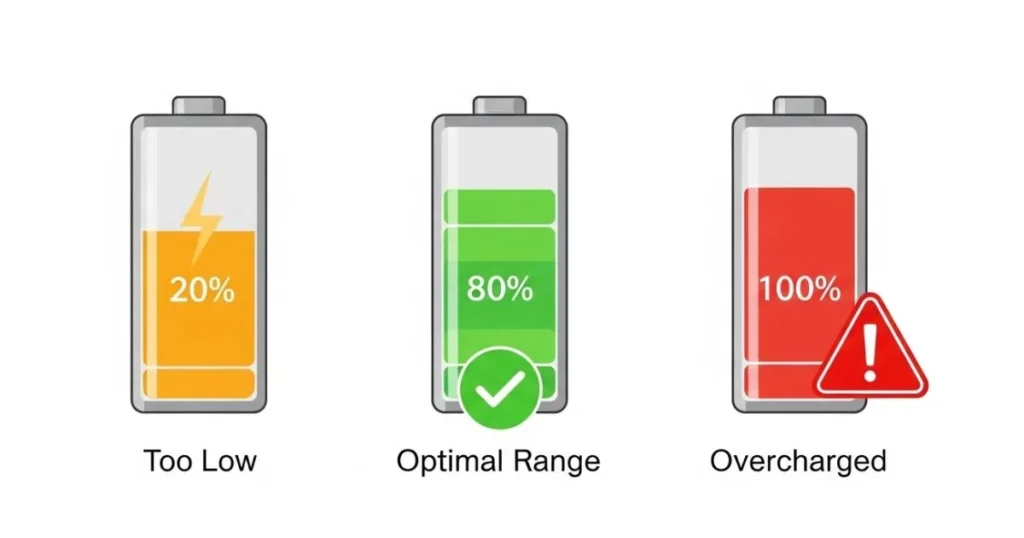
The sweet spot for lithium-ion battery health lies between 20% and 80% charge. Operating within this range reduces stress on the battery cells and minimizes degradation. When you consistently charge to 100%, you’re pushing the battery to its voltage limit, which accelerates chemical breakdown inside the cells. Similarly, letting your battery drain below 20% forces the cells to work harder during the next charge cycle.
Research from battery manufacturers shows that keeping your charge between these levels can extend battery life by up to 50% compared to full charge cycles. For daily commuters, this means charging when you get home rather than waiting until the battery is nearly dead, and unplugging once you reach 80% rather than leaving it overnight to hit 100%.
2. Avoid Extreme Temperature Exposure
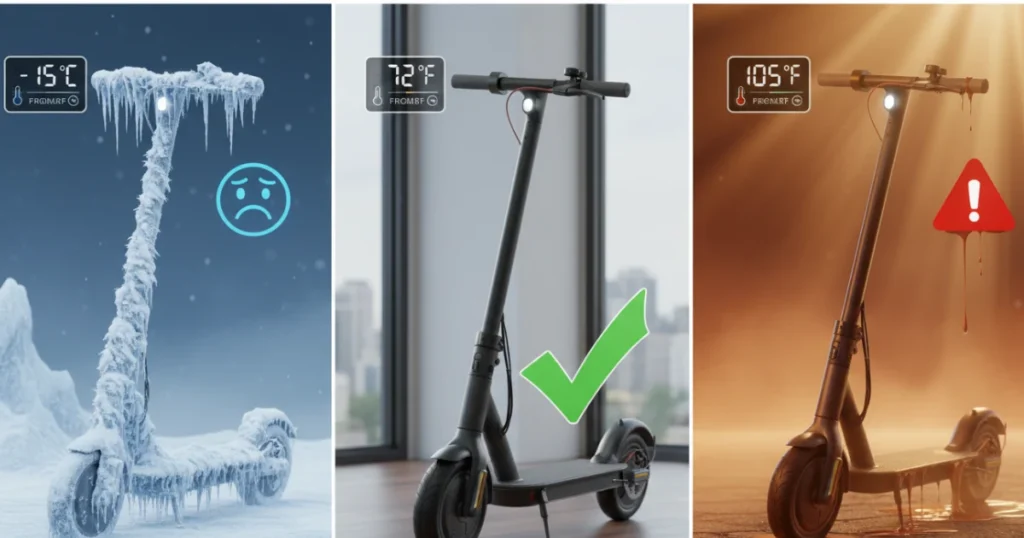
Temperature is your battery’s biggest environmental enemy. Lithium-ion batteries perform optimally between 50-85°F (10-29°C). When temperatures climb above 95°F, the chemical reactions inside your battery accelerate, leading to faster degradation and potential safety issues. Cold temperatures below 32°F cause the battery’s internal resistance to increase, reducing available power and potentially damaging cells if you charge while cold.
Store your scooter indoors whenever possible, especially during summer and winter extremes. If you must ride in cold weather, let the battery warm to room temperature before charging. For hot climates, avoid leaving your scooter in direct sunlight or inside a hot car. Some riders in extreme climates even store their batteries in climate-controlled spaces separately from the scooter during off-season months.
3. Use Only Manufacturer-Approved Chargers
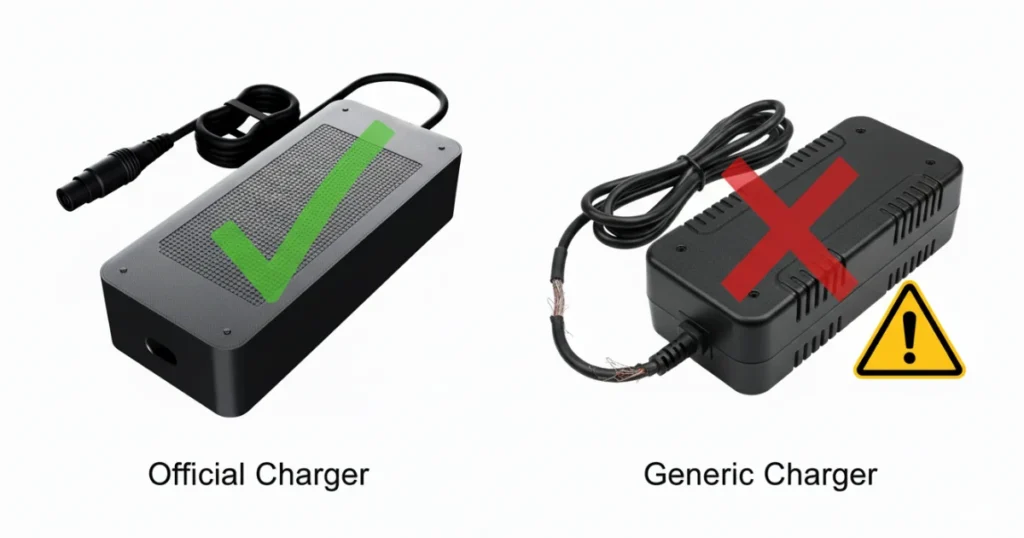
Your scooter’s charger is specifically calibrated to deliver the correct voltage and current for your battery’s chemistry and configuration. Third-party “universal” chargers often lack the precise charging algorithms that protect your battery from overcharging or voltage spikes. The manufacturer’s charger includes built-in safety features like automatic shutoff, temperature monitoring, and cell balancing that generic alternatives simply don’t provide. While aftermarket chargers might cost $20-30 less, using one risks damaging a $300-500 battery.
If you need a replacement charger, always purchase directly from the manufacturer or an authorized dealer. Keep your original charger’s serial number and specifications documented, and check the voltage output (usually 42V for 36V batteries or 54.6V for 48V batteries) to ensure any replacement matches exactly.
4. Never Let Your Battery Sit Fully Discharged
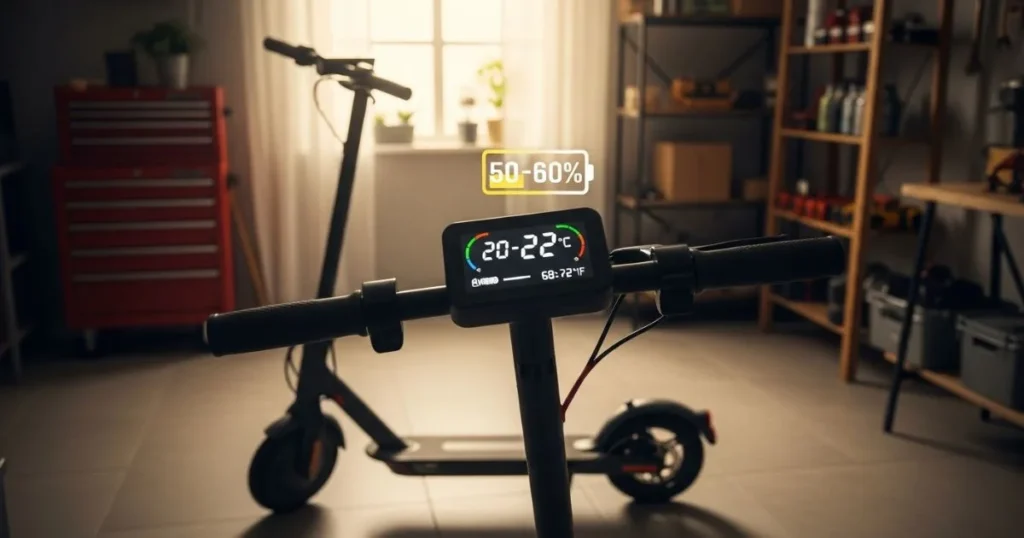
A fully discharged lithium-ion battery enters a dangerous state called deep discharge, where the voltage drops so low that permanent damage occurs. If your electric scooter battery sits at 0% for more than a few days, it may become impossible to recharge or severely lose capacity.
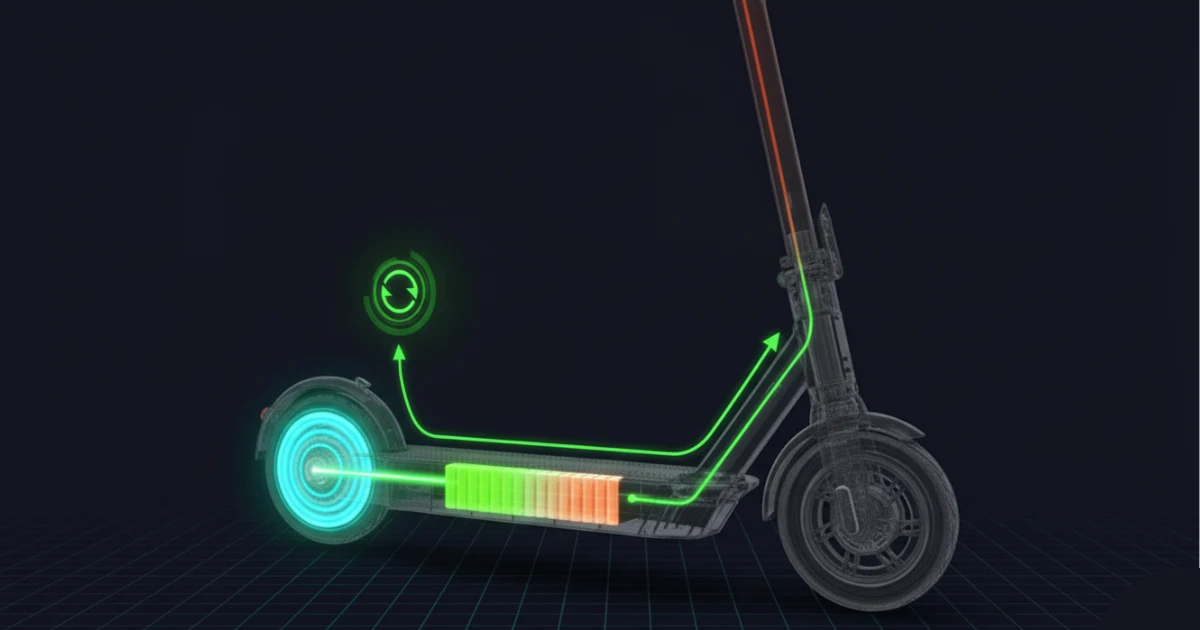
The battery management system (BMS) inside your scooter tries to prevent complete depletion, but if you ignore low battery warnings and let it die completely, you’re bypassing these protections. For storage periods longer than a week, maintain a charge level around 50-60%. This keeps the battery chemistry stable without the stress of a full charge. If you won’t use your scooter for a month or more, check the battery level every 3-4 weeks and top it up if it drops below 40%. Think of it like maintaining a car battery—regular attention prevents major problems.
5. Charge After Every Ride (But Not Immediately)
Establishing a consistent charging routine prevents the accidental deep discharges that shorten battery life. However, timing matters just as much as frequency. After a ride, your battery is warm from use and from regenerative braking heat. Plugging in immediately while the battery is still hot can cause additional thermal stress.
Wait 15-30 minutes for the battery to cool to room temperature before connecting the charger. This cooling period is especially important after long rides or on hot days. Once cooled, charge your scooter to the 80% level rather than 100% for daily use. Save the full 100% charges for occasions when you need maximum range, such as a long trip. This balanced approach keeps your battery topped up enough for daily commutes while avoiding the degradation that comes from constantly maxing out the charge.
6. Store at 50-60% Charge for Extended Periods
Long-term storage is where many first-time owners unknowingly damage their batteries. Whether you’re storing your scooter for winter or simply taking a break from riding, the charge level you maintain makes a huge difference. At 50-60% charge, the battery’s internal chemistry remains stable with minimal degradation over months of inactivity.
Storing at full charge keeps the cells under constant stress, while storing depleted risks deep discharge as the battery slowly loses charge through self-discharge (typically 3-5% per month). For storage periods of 2-6 months, check the charge level monthly and recharge to 60% if it drops below 50%. Store in a cool, dry location away from direct sunlight and extreme temperatures. Before riding again after storage, charge fully and take a short test ride to recalibrate the battery management system.
7. Clean Battery Contacts Regularly
Dirty or corroded battery contacts create resistance that interferes with charging efficiency and power delivery. Every 2-3 months, inspect the charging port and battery terminals for dirt, dust, or signs of corrosion. Use a dry microfiber cloth to gently clean the metal contacts, or for stubborn buildup, apply a small amount of isopropyl alcohol (90% or higher) with a cotton swab. Make sure connections are completely dry before charging or riding. Moisture in the charging port is a common issue for riders who use their scooters in rain or wet conditions.
If you ride in wet weather, dry the charging port thoroughly with compressed air or a cloth before plugging in. Some riders apply a thin layer of dielectric grease to exposed contacts (not inside the charging port) to prevent corrosion, though this should only be done following manufacturer guidelines for your specific model.
8. Monitor Battery Health Through Your Scooter’s App
Most modern electric scooters include smartphone apps that display detailed battery information beyond just the percentage indicator. These apps show the actual voltage, individual cell health, charge cycles completed, and estimated remaining capacity. Check these metrics monthly to catch degradation early. A healthy battery should show balanced cell voltages (within 0.1-0.2V of each other) and maintain at least 80% of its original capacity after 500 charge cycles. If you notice one cell significantly lower than others, the battery may need professional servicing or replacement. Track your battery’s performance over time by noting the range you achieve on a full charge under similar conditions.
A sudden 20-30% drop in range often indicates a problem requiring attention. Some apps also log temperature data, which can help you identify if heat exposure is affecting your battery’s health.
9. Avoid Rapid Charging When Possible
Fast chargers are convenient but use higher current levels that generate more heat and stress battery cells. While occasional rapid charging won’t destroy your battery, making it your default charging method will accelerate degradation. Standard chargers typically deliver 2-3 amps, taking 4-6 hours for a full charge, while fast chargers push 5-8 amps to complete the job in 2-3 hours. That extra speed comes at the cost of increased heat generation and chemical stress. For daily commuting, use the standard charger overnight or while at work.
Reserve fast charging for emergencies when you genuinely need quick turnaround times. If you must use rapid charging regularly, try to stop at 80% rather than pushing to 100%, which reduces some of the stress. Pay attention to battery temperature during and after fast charging—if it feels excessively hot to the touch, give it time to cool before riding.
10. Replace Before Complete Failure
Battery replacement is inevitable, but timing it right prevents getting stranded and potentially damaging your scooter’s electrical system. Most electric scooter batteries should be replaced after 500-800 full charge cycles, or when capacity drops below 70-80% of original. Signs that replacement time is approaching include significantly reduced range (more than 30% loss), longer charging times, the battery not holding charge overnight, or visible swelling of the battery case.
Don’t wait for complete failure—a dying battery can send voltage fluctuations through your scooter’s controller and motor, potentially causing more expensive damage. When you notice consistent performance decline, start planning for replacement. Purchase from the original manufacturer or authorized dealers to ensure compatibility and quality. Some manufacturers offer battery health check services that can definitively tell you whether replacement is needed or if other issues are affecting performance.
How Electric Scooter Battery Maintenance Applies to First-Time Buyers
Why New Owners Need to Establish Good Habits Immediately
The first three months of ownership set the pattern for your battery’s entire lifespan. First-time buyers often don’t realize that battery degradation is cumulative—every poor charging decision, every extreme temperature exposure, and every deep discharge adds up over time. Unlike a car engine that might tolerate occasional neglect, battery chemistry is unforgiving. The good news is that establishing proper maintenance habits from day one is remarkably simple once you understand the principles.
New owners should create a charging checklist: charge between 20-80% daily, use the original charger, avoid temperature extremes, and never store fully discharged. Post this checklist near your charging location for the first month until these practices become automatic. The habits you form now will determine whether you’re replacing your battery in 2 years or 5 years.
Best Practices Specifically for First-Time Electric Scooter Owners
Do invest in a smart outlet timer to automatically cut power once your battery reaches 80%, preventing overnight overcharging while you build better habits. Do document your first full-charge range under typical conditions so you have a baseline to measure degradation against. Do join online communities for your specific scooter model where experienced owners share maintenance tips and troubleshooting advice.
Do read your owner’s manual cover-to-cover, especially sections about battery care—many scooters have model-specific requirements. Don’t panic about getting every charge cycle perfect—consistency matters more than perfection, and occasional 100% charges won’t ruin your battery. Don’t assume all scooters are the same—battery capacity, chemistry, and care requirements vary significantly between models. Don’t ignore warning lights or app notifications about battery health—these alerts exist for a reason and catching problems early saves money.
Advanced Battery Optimization Strategies
Pro Tips for Maximum Battery Performance
Calibrate your battery management system every 2-3 months by performing a complete 0-100% charge cycle. This helps the BMS accurately track capacity and prevents range estimation errors that can leave you stranded. When possible, reduce power consumption by using eco mode for flat terrain and saving sport mode for hills where you need the extra power. Lower power draw means less heat generation and reduced stress on battery cells.
Pre-condition your battery in extreme weather—if riding in cold conditions, briefly run the scooter indoors before heading out to warm the battery. Install a battery insulation wrap if you regularly ride in temperatures below 40°F, which helps maintain optimal operating temperature. Consider your tire pressure too; underinflated tires increase rolling resistance, forcing the motor to draw more power and draining the battery faster while generating unnecessary heat.
Understanding Battery Replacement Economics
Planning for battery replacement means understanding the total cost of ownership. Original manufacturer batteries typically cost $300-600 depending on capacity and model, while third-party options may appear cheaper at $150-300. However, third-party batteries often lack the quality control, proper cell balancing, and warranty protection of OEM options.
A cheaper battery that fails after 300 cycles costs more long-term than a quality battery lasting 800+ cycles. Calculate your cost per charge cycle: a $400 battery lasting 800 cycles costs $0.50 per full charge cycle, while a $200 battery lasting 300 cycles costs $0.67 per cycle—making the expensive option actually cheaper. Factor in labor costs if professional installation is required, typically $50-100. Some manufacturers offer trade-in programs for old batteries, reducing replacement costs by $50-100 while ensuring proper recycling of the hazardous materials inside lithium-ion cells.
Frequently Asked Questions
Q: How long should my electric scooter battery last with proper maintenance?
With consistent proper care—charging between 20-80%, avoiding temperature extremes, and using the manufacturer’s charger—expect 3-5 years or 500-1000 full charge cycles before replacement becomes necessary. Most lithium-ion batteries retain about 80% capacity at 500 cycles, which is when many users notice reduced range requiring replacement.
However, aggressive riders who frequently drain to zero, charge to 100%, or ride in extreme temperatures might see failure within 18-24 months. Conversely, meticulous maintenance focusing on partial charges, indoor storage, and moderate use can extend life beyond 5 years. Your riding frequency matters too: daily commuters accumulate cycles faster than weekend riders, though sitting unused also degrades batteries slowly through chemical aging.
Q: Can I leave my electric scooter plugged in overnight?
While modern chargers include auto-shutoff features that stop current flow when fully charged, leaving your scooter plugged in overnight regularly isn’t ideal for battery longevity. The trickle charge that maintains 100% creates ongoing stress on the cells. For occasional overnight charging, you won’t cause significant damage, but making it a nightly habit accelerates degradation.
Better practice: plug in when you return from riding and unplug once you reach 80-90%, or use a smart timer to cut power after 3-4 hours. If you must charge overnight due to your schedule, consider investing in a smart outlet ($20-30) that automatically stops power delivery after a set time period, protecting your battery while you sleep.
Q: What happens if my battery gets wet?
Most electric scooter batteries have IP ratings (typically IP54 to IP67) indicating their water resistance level. IP54 means splashes and light rain are okay, but immersion or pressure washing will cause damage. If your charging port gets wet, it’s critical to completely dry it before plugging in—water and electricity create short circuits that can permanently damage the battery management system.
Use compressed air or let it air dry for several hours. If the battery itself gets soaked from riding through deep puddles or heavy rain, power off immediately and let the scooter dry for 24-48 hours before attempting to charge or ride. Check your owner’s manual for your specific IP rating, and invest in a silicone charging port cover ($5-10) if you frequently ride in wet conditions.
Q: Is it better to charge my battery to 100% once a week or keep it at 80% daily?
For maximizing battery lifespan, keeping your electric scooter battery between 20-80% with daily partial charges is significantly better than weekly full charges. Partial charge cycles create less stress than full cycles, and lithium-ion batteries actually “prefer” frequent shallow charges over occasional deep cycles.
The 80% rule isn’t absolute—charging to 100% once or twice a month won’t cause harm and helps calibrate the battery management system. However, if your daily commute only requires 40% of total capacity, there’s no benefit to charging to 100% daily. Think of it this way: you’re extending battery life by 40-50% through partial charging, which translates to 1-2 extra years of use before replacement. Only charge to 100% when you specifically need the maximum range for longer trips.
Q: Should I remove my battery during winter storage?
If your scooter has a removable battery and you live in an area with harsh winters, removing the battery for indoor storage at room temperature is the single best thing you can do to preserve battery health. Store it at 50-60% charge in a location that stays between 50-70°F, away from direct sunlight. Check monthly and recharge to 60% if the level drops below 50%. If your battery is non-removable, store the entire scooter indoors if possible—an unheated garage is better than outdoor storage, but a heated basement or spare room is ideal.
Extreme cold (below 20°F) can cause permanent capacity loss, especially if you attempt to charge while the battery is cold. Before riding again in spring, let the battery acclimate to room temperature for several hours, then fully charge and take a short test ride to ensure everything functions properly.
Conclusion
Maintaining your electric scooter battery doesn’t require technical expertise—just consistent application of these proven strategies. The three most critical practices are charging between 20-80% for daily use, protecting your battery from temperature extremes, and using only the manufacturer-approved charger. These simple habits can extend your battery’s lifespan from 2 years to 5+ years, saving you hundreds in replacement costs while ensuring reliable performance. Start by implementing the charging routine and storage practices immediately, then build in the advanced optimization techniques as you become more comfortable with your scooter.
Your first action should be setting up a charging schedule that prevents overnight overcharging. Consider investing in a smart outlet timer today and posting a charging checklist near your power outlet. Monitor your battery health monthly through your scooter’s app, and document your range performance to catch degradation early. With these maintenance practices in place, you’ll maximize your investment and enjoy worry-free riding for years to come.